

Breaking! U.S. transplants pig kidneys to humans, now surviving for over a month
Release time:
2023-09-01
As we all know, organ transplantation, as the last resort treatment for many end-stage organ diseases, has long been in an objective situation where demand far exceeds supply (organ donation). As a result, many research teams have also put their hopes for a breakthrough in the field of xenotransplantation - trying to make pig hearts, pig kidneys and pig livers work in the human body.
Recently, New York University Langone Medical Center announced that a genetically edited pig kidney transplanted into Maurice Miller, a 57-year-old brain-dead man, on July 14th has successfully survived for one month and is still functioning normally, and this latest research breakthrough also marks another critical step towards the eventual realization of pig kidney transplantation in human trials.
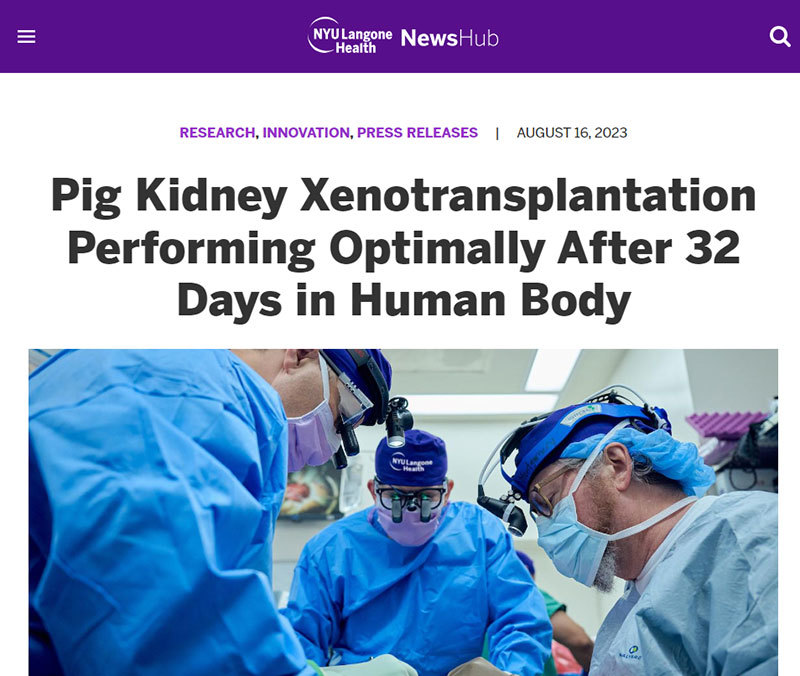
(Source: NYU Langone Medical Center)
The trial doesn't end here, and after consulting with the Miller family, the researchers will continue to follow the functioning of the porcine kidneys in month 2. This will also help to see if existing anti-rejection drugs, are as useful for pig kidneys. This is an important step in closing the organ donation gap.
Robert Montgomery, director of the Transplantation Institute at NYU Langone Health, says pig kidneys so far appear to work as well as human organs, if not better, than human transplanted kidneys.
This pig kidney transplant was performed on July 14 of this year, and when the pig kidney was implanted into a male brain-dead patient, it immediately began producing urine.
While 1 month may not seem like a long time, this is the longest time ever that a pig kidney has continued to function in a human body, and the record is still being extended. This hospital has previously conducted trials to transplant pig hearts and kidneys into humans, but they lasted less than 72 hours, mainly to see if the human immune system would immediately start attacking the pig kidneys. Also, previous trials of pig kidney transplants in baboons have shown that 14-30 days after surgery is another window of danger.
The patient who received the transplant was named Maurice "Mo" Miller, who died suddenly (brain death) at the age of 57, and whose remains were donated by his family. Miller's sister stated, "I struggled with it, but I thought it was something my brother would want to do, so I offered him to them. He'll go down in the medical books and be remembered forever."
For decades, scientists around the world have been actively exploring the possibility of xenotransplantation. If animal organs could actually be implanted into the human body and work like human organs, it would go a long way toward solving the problem of the shortage of human transplant organs.
However, many past attempts at xenotransplantation have failed due to the fact that the human immune system instinctively attacks foreign tissue. It is only in recent years, benefiting from emerging technologies such as advanced gene editing, that scientists have begun to conduct xenotransplantation experiments using genetically modified pigs, whose modified organs are better able to match the human body.
Last year, with special permission from regulators, surgeons at the University of Maryland transplanted a genetically edited pig heart and enabled the patient to survive for a record-breaking two months, which has created a miracle in medical history.
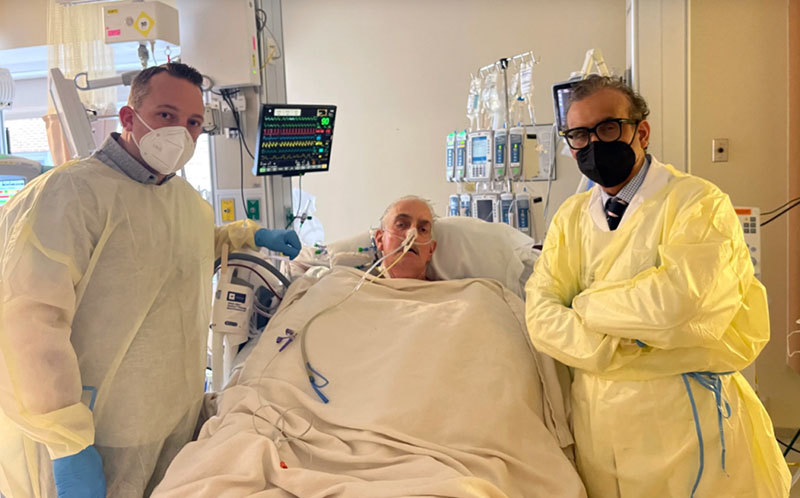
(David Bennett profile picture, source: social media)
The researchers say it's not clear that a human body in a brain-dead state can adequately demonstrate how a real human body responds to a pig organ, but the study educates the general public about xenotransplantation and provides a positive signal for the broader need for organ donation. While there are still a number of obstacles to a substantial breakthrough, the research is worth looking forward to.
Latest developments

The debut and discourse of the YinFeng Life Continuation Project not only served as an authoritative demonstration of its own ethical governance framework but also contributed practical wisdom toward establishing industry norms.

Yinfeng Foundation Honored as "2025 Public Welfare Donor" by Jinan Red Cross
Looking ahead, Yinfeng Foundation will use this recognition as an opportunity to further deepen its strategic collaboration with the Jinan Red Cross, expand cooperation in areas such as life health and emergency response, and continue to empower efforts to accelerate the construction of a "new, strong, excellent, rich, beautiful, and high-quality" modern socialist strong capital city, contributing even more Yinfeng strength to this endeavor.

The team successfully developed the CryoSIM platform, an intelligent microfluidics and deep learning-integrated system. This platform deeply integrates core technologies of deep learning and microfluidics to enable high-throughput, high-precision automated analysis of oocyte membrane permeability. It provides a novel technological tool for optimizing and advancing the clinical translation of oocyte cryopreservation techniques. Additionally, it offers an innovative practical paradigm for the application of artificial intelligence in low-temperature biomedicine and reproductive medicine.

Public Welfare Partnership: A Special Letter from the Jinan Red Cross
On the afternoon of January 30, 2026, the Jinan Red Cross presented a letter of special significance to the Shandong Yinfeng Life Science Public Welfare Foundation (hereinafter referred to as the Yinfeng Foundation).

World’s First Achievement Highlights Brand Leadership
In the future, Yinfeng Life Science Research Institute will continue to uphold its mission of "Dedicated to Medical Technology, Safeguarding Human Health." It will empower brand building with more original and pioneering scientific and technological achievements, contributing wisdom and strength to Shandong's goal of building a national regional innovation hub and promoting Chinese brands on the global stage.

Global First Ovarian Tissue Dual Activation Technology Debuts at 2025 Jinan Achievements Conference
Currently, the ovarian tissue dual activation technology has been successfully applied in clinical practice at Beijing University of Chinese Medicine Shenzhen (Longgang) Hospital, having treated over 400 patients with a treatment success rate of 70%. Over the next three years, Shandong Yinfeng Life Science Research Institute plans to use Jinan as a center to gradually expand the transformation and application of this technological achievement nationwide.
Yinfeng Life Continuation Plan
Address: Yinfeng Biotechnology Park, 1758 Gangyuan 6th Road, High-tech Zone, Jinan City, Shandong Province
Zip Code: 250102
Telephone: 0086-0531-88897351
Mobile: 0086-19953155515

Mobile website

Official WeChat Public Number
Links:Red Cross Society of China丨Shandong Red Cross Society丨Shandong Provincial Health Commission | Yinfeng Group| Yinfeng Biological Group
All rights reserved©Yinfeng Life Continuation Powered by www.300.cn SEO