

Significant Differences: A Detailed Explanation of Human Cryopreservation and Perfusion Surgery at Home and Abroad
Release time:
2024-12-13
Human cryopreservation is a forward-looking and challenging interdisciplinary research project in life sciences, aimed at preserving the human body through the combined study of cryomedicine, cryobiological engineering, biomaterials, and clinical medicine. The objective is to maintain the structural integrity of the human body and gradually explore the restoration of function in tissues, organs, and systems after rewarming.
Currently, only a few institutions globally can perform complete human cryopreservation surgeries, including Alcor, CI in the United States, and KrioRus in Russia. The Shandong Yinfeng Institute of Life Sciences is the only human cryopreservation center in Asia. While these institutions are committed to realizing this project, significant differences exist in specific techniques, such as perfusion surgery.
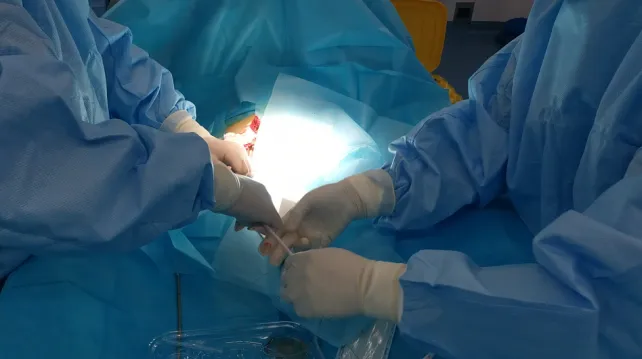
Perfusion Surgery: A Significant Difference
Perfusion surgery is of utmost importance in all stages of human cryopreservation. In this stage, the blood in the human body is replaced with a cryoprotectant.
Foreign Perfusion Surgery: Traditional Open Chest Method
In foreign countries where human cryopreservation started earlier, the traditional open chest method is typically used in perfusion surgery. This involves directly inserting the perfusion cannula into the heart to replace the blood with cryoprotectant. The traditional open chest surgery usually involves an incision of about 30 cm.
Domestic Perfusion Surgery: Minimally Invasive Double-Access Extracorporeal Circulation Perfusion Plan
As a latecomer, the Shandong Yinfeng Institute of Life Sciences has been continuously optimizing and innovating surgical methods. They have adopted an unprecedented minimally invasive double-access extracorporeal circulation perfusion plan, reducing the surgical incision to 3-5 cm. This surgical approach is commonly used in cardiac surgery. The surgical team is composed of experts from top-tier domestic hospitals, including clinical response experts, cardiac surgeons, anesthesiologists, extracorporeal circulation perfusionists, and related auxiliary staff.
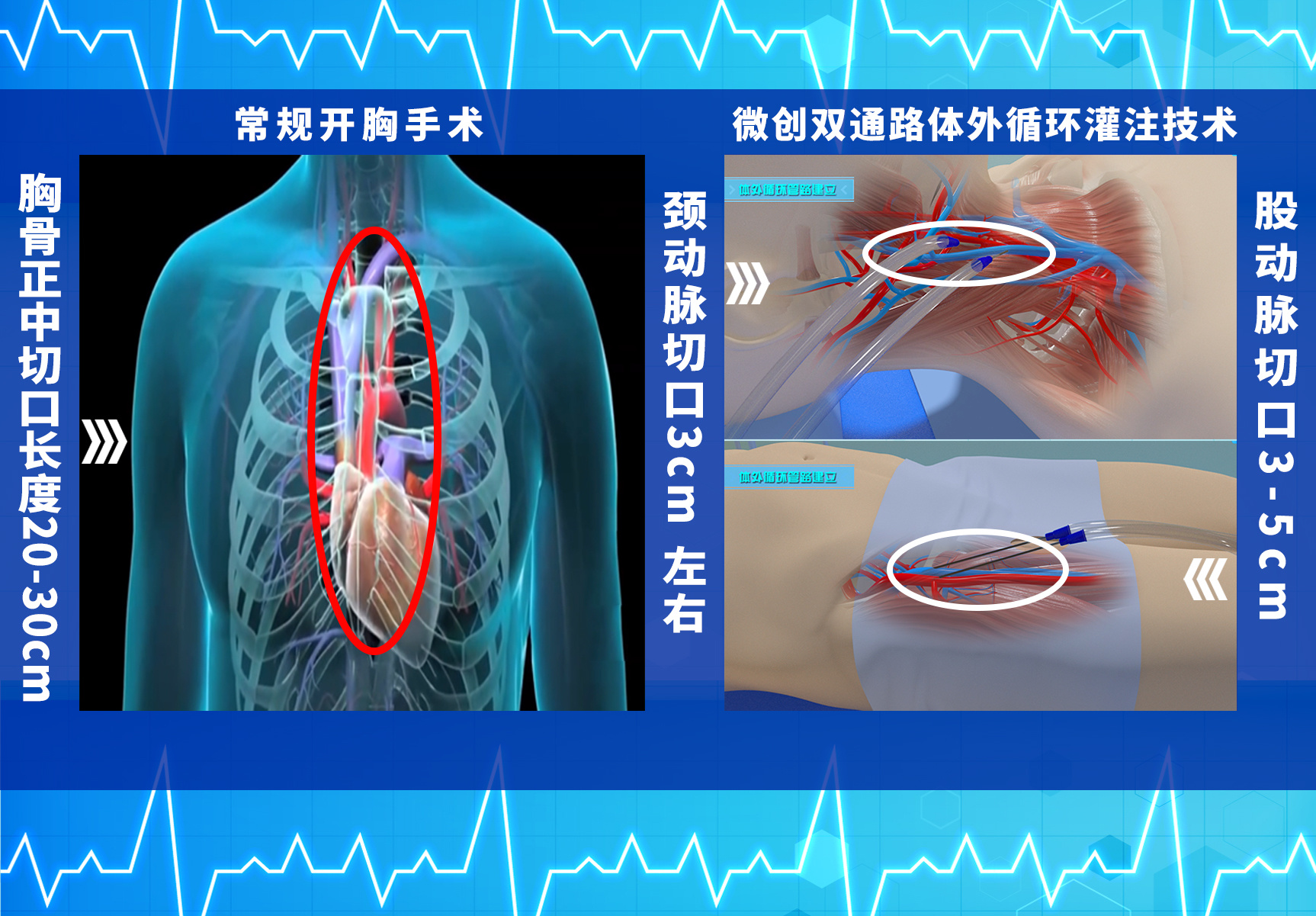
Director Sun Wenyu, a cardiac surgeon, mentioned in a media interview: "The process of blood replacement involves fully substituting the blood in the body with cryoprotectant using advanced minimally invasive double-access extracorporeal circulation perfusion surgery. This avoids the open damage caused by chest operations, with extracorporeal circulation perfusion through arterial and venous incisions at the neck and groin. This ensures brain perfusion while also considering systemic circulation perfusion. The entire perfusion surgery is conducted on a low-temperature operating table, using life support systems combined with extracorporeal circulation cooling technology to achieve body cooling, blood replacement, and cryoprotectant perfusion."
Domestic Technology Upgrade: Applying ECMO Technology to Human Cryopreservation Surgery
Building on this, the Yinfeng Cryomedicine expert team continuously upgrades the perfusion technology, applying ECMO technology to human cryopreservation surgery. This pioneering approach uses right femoral artery and vein ECMO percutaneous cannulation to rapidly establish extracorporeal circulation. During surgery, there is drainage through the femoral artery, vein, and bilateral external jugular veins, connected to extracorporeal circulation equipment. Perfusion pressure is used to control drainage flow, further enhancing perfusion efficiency to maximize brain and body synchronized cooling.
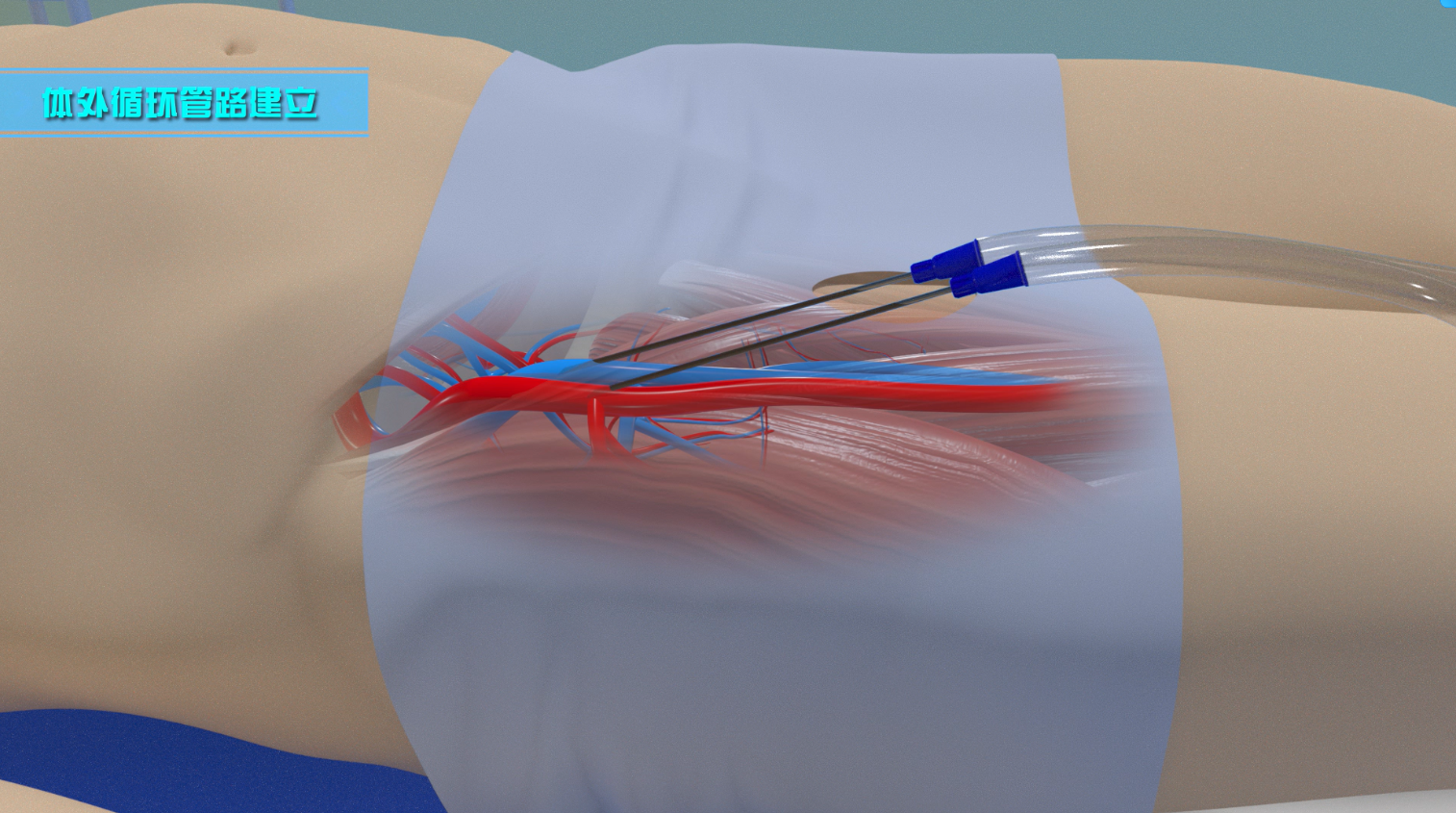
Although there are significant differences in surgical methods between domestic and foreign institutions, all are committed to advancing human cryopreservation technology to a more mature and scientific stage. The continuous emergence of new technologies drives the improvement of human cryopreservation technology and injects new vitality and hope into the future of medical development. Medicine is boundless, and the pursuit of dreams never stops. With our collective efforts, hopefully, this "lighthouse project" will soon become a reality.
Latest developments

The debut and discourse of the YinFeng Life Continuation Project not only served as an authoritative demonstration of its own ethical governance framework but also contributed practical wisdom toward establishing industry norms.

Yinfeng Foundation Honored as "2025 Public Welfare Donor" by Jinan Red Cross
Looking ahead, Yinfeng Foundation will use this recognition as an opportunity to further deepen its strategic collaboration with the Jinan Red Cross, expand cooperation in areas such as life health and emergency response, and continue to empower efforts to accelerate the construction of a "new, strong, excellent, rich, beautiful, and high-quality" modern socialist strong capital city, contributing even more Yinfeng strength to this endeavor.

The team successfully developed the CryoSIM platform, an intelligent microfluidics and deep learning-integrated system. This platform deeply integrates core technologies of deep learning and microfluidics to enable high-throughput, high-precision automated analysis of oocyte membrane permeability. It provides a novel technological tool for optimizing and advancing the clinical translation of oocyte cryopreservation techniques. Additionally, it offers an innovative practical paradigm for the application of artificial intelligence in low-temperature biomedicine and reproductive medicine.

Public Welfare Partnership: A Special Letter from the Jinan Red Cross
On the afternoon of January 30, 2026, the Jinan Red Cross presented a letter of special significance to the Shandong Yinfeng Life Science Public Welfare Foundation (hereinafter referred to as the Yinfeng Foundation).

World’s First Achievement Highlights Brand Leadership
In the future, Yinfeng Life Science Research Institute will continue to uphold its mission of "Dedicated to Medical Technology, Safeguarding Human Health." It will empower brand building with more original and pioneering scientific and technological achievements, contributing wisdom and strength to Shandong's goal of building a national regional innovation hub and promoting Chinese brands on the global stage.

Global First Ovarian Tissue Dual Activation Technology Debuts at 2025 Jinan Achievements Conference
Currently, the ovarian tissue dual activation technology has been successfully applied in clinical practice at Beijing University of Chinese Medicine Shenzhen (Longgang) Hospital, having treated over 400 patients with a treatment success rate of 70%. Over the next three years, Shandong Yinfeng Life Science Research Institute plans to use Jinan as a center to gradually expand the transformation and application of this technological achievement nationwide.
Yinfeng Life Continuation Plan
Address: Yinfeng Biotechnology Park, 1758 Gangyuan 6th Road, High-tech Zone, Jinan City, Shandong Province
Zip Code: 250102
Telephone: 0086-0531-88897351
Mobile: 0086-19953155515

Mobile website

Official WeChat Public Number
Links:Red Cross Society of China丨Shandong Red Cross Society丨Shandong Provincial Health Commission | Yinfeng Group| Yinfeng Biological Group
All rights reserved©Yinfeng Life Continuation Powered by www.300.cn SEO