

Cryoprotectant
Release time:
2017-03-13
Cryoprotectants are the basis for research on cryopreservation of various human cells, tissues, and organs. Since the discovery of the cryoprotective effect of glycerol in the 1960s, more than 50 drugs or reagents have been used for cryoprotection. In recent years, with the development of vitrification technology, in-depth research on cryoprotectants has attracted the attention of many researchers.
The cryopreservation of biological sample tissues usually includes two types: subnormal temperature preservation of 2 to 10°C and deep cryopreservation of -80 to -196°C. Subnormal temperature storage of 2 to 10°C is usually suitable for tissues and organs that can be transplanted or transported in a short time. Commonly used protective solutions include UW solution developed by the University of Wisconsin and has been clinically used for nearly 20 years, and was studied by Georges Lopez of France. The developed IGL solution, a low-potassium, low-sodium, non-body fluid HTK preservation solution, combines the advantages of UW solution and HTK solution, and is used in Celsior solution (CS solution) for cardiac preservation. Several cryopreservation solutions with relatively good effects, such as SMO solution (Shanghai Multi-Organ Preservation Solution), have also been developed in China. In addition, there are EC fluids that are widely used in Europe for standard preservation of clinical kidney transplants, and HC-A fluids that are mainly used for lavage and cryopreservation of organ transplants in China.
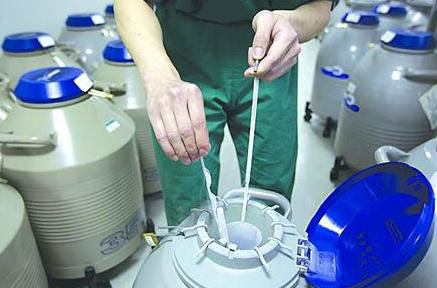
With the advancement of science and technology and the increasing demand for long-term preservation of samples, cryopreservation has become the only choice for cell, tissue and organ preservation research. Currently, liquid nitrogen cryopreservation has widely become the best way to preserve various cells and tissues. Way.
Cryoprotectants can be divided into two categories based on their role in cryogenic preservation: permeable and non-permeable protectants. Penetration protective agents are mainly polyols, including ethylene glycol (EG), dimethyl sulfoxide (DMSO), propylene glycol, glycerol, formamide and acetamide, etc. The role of osmotic protectants is to reduce or avoid the formation of intracellular ice crystals by lowering the freezing point and replacing the water around intracellular proteins, DNA and other components. Non-permeable protective agents mainly include low molecular weight monosaccharides (fructose, glucose, maltose, etc.), disaccharides (sucrose, trehalose, etc.), polysaccharides (raffinose, etc.) and polymer compounds with a molecular weight greater than 1000 Da ( Polysucrose, dextran, polyvinylpyrrolidone, polyethylene glycol, polyvinyl alcohol and hydroxyethyl starch, etc.). The non-permeable protective agent is beneficial to improving the vitrification properties of the protective solution and improving the cryoprotective effect. At the same time, it promotes cell dehydration through osmosis, stabilizes the cell membrane, and reduces the amount of cryoprotectant required to achieve vitrification itself, thus reducing the vitrification solution. toxicity.
Ice blockers, antifreeze proteins, magnetic nanoparticles, and even some Chinese herbal ingredients (such as ginsenosides) and other new substances that are different from the above two categories have also been documented to have good cryoprotective effects. Conduct systematic analysis of the above various substances, screen appropriate combinations of cryoprotective substances according to the properties and requirements of different cryoprotection biological samples, and use advanced instruments and technical means to conduct parameter determination, cooling and recovery procedures screening to protect biological samples from ice crystals Damage, thereby providing good biological samples for clinical and basic scientific research, has become a new research direction.
In addition, on the basis of the research and development of existing protective agents, we should also actively pay attention to some other substances with potential application value, such as antioxidants (propyl citrate, vitamin E, vitamin C, amino acids, lecithin, protein hydrolysates, Sodium thiosulfate, sodium ascorbate), etc., finding alternative ingredients for commonly used toxic protective substances such as DMSO, and developing low-toxic or even non-toxic cryoprotectants is also an important research direction for us.
On the basis of the existing deep cryopreservation of various cells, more protective substances are selected and optimized, combined with new substances such as antifreeze proteins and nanomagnetic particles, and appropriate cooling and rewarming procedures are selected to achieve the preservation of samples such as clinical tissues and organs. High quality preservation.
Previous article
Next article
Previous article
Next article
Latest developments

The debut and discourse of the YinFeng Life Continuation Project not only served as an authoritative demonstration of its own ethical governance framework but also contributed practical wisdom toward establishing industry norms.

Yinfeng Foundation Honored as "2025 Public Welfare Donor" by Jinan Red Cross
Looking ahead, Yinfeng Foundation will use this recognition as an opportunity to further deepen its strategic collaboration with the Jinan Red Cross, expand cooperation in areas such as life health and emergency response, and continue to empower efforts to accelerate the construction of a "new, strong, excellent, rich, beautiful, and high-quality" modern socialist strong capital city, contributing even more Yinfeng strength to this endeavor.

The team successfully developed the CryoSIM platform, an intelligent microfluidics and deep learning-integrated system. This platform deeply integrates core technologies of deep learning and microfluidics to enable high-throughput, high-precision automated analysis of oocyte membrane permeability. It provides a novel technological tool for optimizing and advancing the clinical translation of oocyte cryopreservation techniques. Additionally, it offers an innovative practical paradigm for the application of artificial intelligence in low-temperature biomedicine and reproductive medicine.

Public Welfare Partnership: A Special Letter from the Jinan Red Cross
On the afternoon of January 30, 2026, the Jinan Red Cross presented a letter of special significance to the Shandong Yinfeng Life Science Public Welfare Foundation (hereinafter referred to as the Yinfeng Foundation).

World’s First Achievement Highlights Brand Leadership
In the future, Yinfeng Life Science Research Institute will continue to uphold its mission of "Dedicated to Medical Technology, Safeguarding Human Health." It will empower brand building with more original and pioneering scientific and technological achievements, contributing wisdom and strength to Shandong's goal of building a national regional innovation hub and promoting Chinese brands on the global stage.

Global First Ovarian Tissue Dual Activation Technology Debuts at 2025 Jinan Achievements Conference
Currently, the ovarian tissue dual activation technology has been successfully applied in clinical practice at Beijing University of Chinese Medicine Shenzhen (Longgang) Hospital, having treated over 400 patients with a treatment success rate of 70%. Over the next three years, Shandong Yinfeng Life Science Research Institute plans to use Jinan as a center to gradually expand the transformation and application of this technological achievement nationwide.
Yinfeng Life Continuation Plan
Address: Yinfeng Biotechnology Park, 1758 Gangyuan 6th Road, High-tech Zone, Jinan City, Shandong Province
Zip Code: 250102
Telephone: 0086-0531-88897351
Mobile: 0086-19953155515

Mobile website

Official WeChat Public Number
Links:Red Cross Society of China丨Shandong Red Cross Society丨Shandong Provincial Health Commission | Yinfeng Group| Yinfeng Biological Group
All rights reserved©Yinfeng Life Continuation Powered by www.300.cn SEO