

Global Record! Major Breakthrough in China's Implantable Brain - Computer Interface Technology
Release time:
2025-09-05
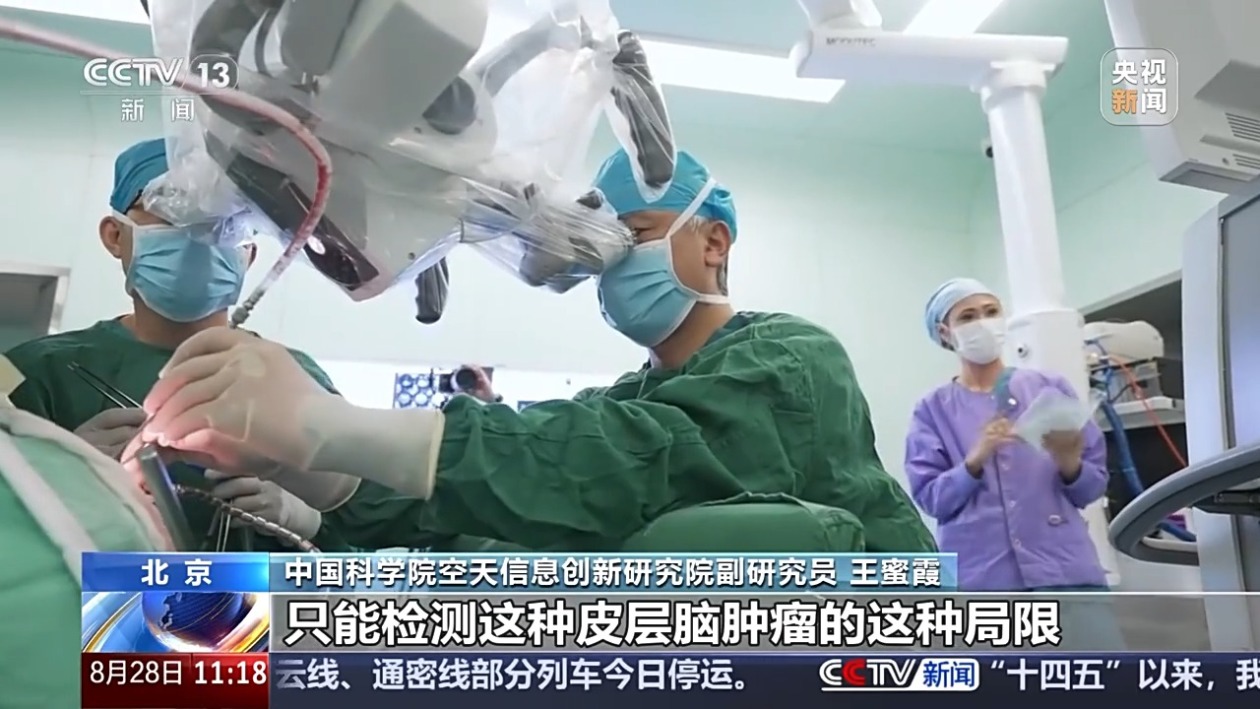
Recently, Chinese scientists have achieved a major breakthrough in the field of implantable brain - computer interface technology. The Aerospace Information Research Institute of the Chinese Academy of Sciences and the First Affiliated Hospital of Harbin Medical University jointly completed the world's first clinical trial for precise positioning of deep - brain tumor boundaries using an implantable microelectrode array. This technology enables high - precision lesion navigation through microelectrode devices implanted in the brain, marking China's leading position in the international arena of precise neurosurgical treatment.
Micron - Level "Brain Navigation": Ultra - Fine Positioning System Built with Chip Lithography Technology
The core of this breakthrough is the self - developed implantable microelectrode device, vividly referred to as the "brain navigation system". It has a spatial resolution of up to 15 microns. If the brain were a 200 - kilometer - span city, this technology could precisely locate every grain of sand. Based on the precision manufacturing of chip lithography technology, neural electrodes are integrated at the front - end of the device using micro - nano technology. After being implanted in the brain, it can collect and interpret neuroelectrophysiological signals in real - time and even detect neurotransmitter chemical signals simultaneously, thus mapping an ultra - fine "functional map" of the brain.
Compared with traditional neural electrode technology, this device overcomes the limitation of only detecting cortical brain tumors and can cover neural signals across the cortex, superficial brain, and deep brain, providing more comprehensive and accurate data for deep - seated lesion positioning.
First Clinical Trial Success: Complete Resection of Glioma in a Patient
The clinical trial was conducted on a glioma patient suffering from language confusion due to brain tumor compression. The research team, combining the patient's imaging data with single - cell - level neural signals from the implanted microelectrodes, accurately identified the boundary between the tumor and normal brain tissue. During the operation, doctors used this "navigation system" to protect the functional areas as much as possible, ultimately achieving complete tumor resection and laying a crucial foundation for the patient's rehabilitation and subsequent treatment.
Technological Breakthrough: Paving a New Way for Neurological Disease Treatment
Due to the infiltrative growth of brain tumors, their boundaries with normal brain tissue are often indistinct, making precise positioning crucial for successful surgery. In this trial, the technology not only enabled precise resection of deep - brain tumors but also improved the patient's postoperative neurological function retention rate and quality of life by protecting healthy brain tissue.
Experts claim that this self - developed technology fills the global gap in precise deep - brain tumor positioning and offers new technical support for the precise treatment of neurological diseases such as epilepsy and Parkinson's. In the future, with technological advancements and wider applications, implantable brain - computer interfaces are expected to become a standard tool in neurosurgery, propelling China's precision medicine to new heights.
Latest developments

The debut and discourse of the YinFeng Life Continuation Project not only served as an authoritative demonstration of its own ethical governance framework but also contributed practical wisdom toward establishing industry norms.

Yinfeng Foundation Honored as "2025 Public Welfare Donor" by Jinan Red Cross
Looking ahead, Yinfeng Foundation will use this recognition as an opportunity to further deepen its strategic collaboration with the Jinan Red Cross, expand cooperation in areas such as life health and emergency response, and continue to empower efforts to accelerate the construction of a "new, strong, excellent, rich, beautiful, and high-quality" modern socialist strong capital city, contributing even more Yinfeng strength to this endeavor.

The team successfully developed the CryoSIM platform, an intelligent microfluidics and deep learning-integrated system. This platform deeply integrates core technologies of deep learning and microfluidics to enable high-throughput, high-precision automated analysis of oocyte membrane permeability. It provides a novel technological tool for optimizing and advancing the clinical translation of oocyte cryopreservation techniques. Additionally, it offers an innovative practical paradigm for the application of artificial intelligence in low-temperature biomedicine and reproductive medicine.

Public Welfare Partnership: A Special Letter from the Jinan Red Cross
On the afternoon of January 30, 2026, the Jinan Red Cross presented a letter of special significance to the Shandong Yinfeng Life Science Public Welfare Foundation (hereinafter referred to as the Yinfeng Foundation).

World’s First Achievement Highlights Brand Leadership
In the future, Yinfeng Life Science Research Institute will continue to uphold its mission of "Dedicated to Medical Technology, Safeguarding Human Health." It will empower brand building with more original and pioneering scientific and technological achievements, contributing wisdom and strength to Shandong's goal of building a national regional innovation hub and promoting Chinese brands on the global stage.

Global First Ovarian Tissue Dual Activation Technology Debuts at 2025 Jinan Achievements Conference
Currently, the ovarian tissue dual activation technology has been successfully applied in clinical practice at Beijing University of Chinese Medicine Shenzhen (Longgang) Hospital, having treated over 400 patients with a treatment success rate of 70%. Over the next three years, Shandong Yinfeng Life Science Research Institute plans to use Jinan as a center to gradually expand the transformation and application of this technological achievement nationwide.
Yinfeng Life Continuation Plan
Address: Yinfeng Biotechnology Park, 1758 Gangyuan 6th Road, High-tech Zone, Jinan City, Shandong Province
Zip Code: 250102
Telephone: 0086-0531-88897351
Mobile: 0086-19953155515

Mobile website

Official WeChat Public Number
Links:Red Cross Society of China丨Shandong Red Cross Society丨Shandong Provincial Health Commission | Yinfeng Group| Yinfeng Biological Group
All rights reserved©Yinfeng Life Continuation Powered by www.300.cn SEO