

A world first! Pig kidney transplanted into human body, functions normally, no rejection yet
Release time:
2021-10-27
Recently, NYU Langone Medical Center conducted a special experiment - transplanting kidneys from pigs into humans for the first time, and there has been no rejection reaction so far. The kidney for this experiment came from a gene-edited pig.
As early as decades ago, scientists envisioned using animal organs to solve the shortage of organs for human transplantation. Since the size of pig organs is just right, and the pig's anatomical structure, physiological indicators, and blood group antigens are similar to those of humans, it has become a hot spot for research. Pig heart valves have been used successfully in humans for decades; the blood thinner heparin is extracted from pig intestines; pig skin grafts are used for burns; Chinese surgeons use pig corneas to restore patients' vision . But xenotransplantation is not just about buying a pig on the market. In order to avoid xenogeneic rejection, scientists need to genetically modify the pigs to reduce as much as possible the molecules in the cells that can cause the body's rejection, so that the pig's organs can take root smoothly. in the human body.
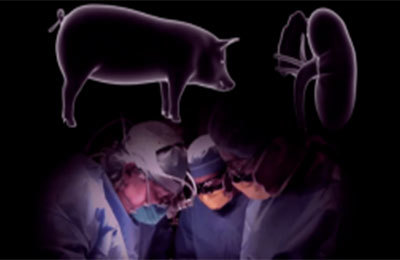
The experiment was completed by a team led by Professor Robert Montgomery, Director of the Transplantation Institute at NYU Langone Health Center, and the experimental pigs were selected to have type O blood. The human recipient was a brain-dead female patient with signs of renal insufficiency, and her family agreed to conduct the experiment before she ceased to show signs of life. Montgomery's team has been preparing for this attempt for three years. During the operation, they used surgical clamps to separate the patient's blood from the pig's kidneys. Once they released the clamp, blood was injected into the new organ. If the new kidney quickly turns blue, it indicates that the immune system has sounded the rallying call and mobilized immune cells to fight against the foreign organ. This means that the work of the Montgomery team in recent years has been wasted.
To avoid risks, the team had connected a pig kidney to a pair of large blood vessels outside a deceased recipient's body last month and observed it for two days. They found that the kidneys did what they were supposed to do, filter waste and produce urine, and did not trigger rejection. Similarly, the brain-dead patient did not experience rejection after the pig kidney was transplanted during the operation, and everything is normal now. Montgomery said: "The surgery looked very normal, and the recipient's abnormal creatinine levels returned to normal after the transplant." The researchers said this is an important step toward realizing the xenotransplantation program, which will save thousands of people every year in the near future. human life.
Previous article
Latest developments

The debut and discourse of the YinFeng Life Continuation Project not only served as an authoritative demonstration of its own ethical governance framework but also contributed practical wisdom toward establishing industry norms.

Yinfeng Foundation Honored as "2025 Public Welfare Donor" by Jinan Red Cross
Looking ahead, Yinfeng Foundation will use this recognition as an opportunity to further deepen its strategic collaboration with the Jinan Red Cross, expand cooperation in areas such as life health and emergency response, and continue to empower efforts to accelerate the construction of a "new, strong, excellent, rich, beautiful, and high-quality" modern socialist strong capital city, contributing even more Yinfeng strength to this endeavor.

The team successfully developed the CryoSIM platform, an intelligent microfluidics and deep learning-integrated system. This platform deeply integrates core technologies of deep learning and microfluidics to enable high-throughput, high-precision automated analysis of oocyte membrane permeability. It provides a novel technological tool for optimizing and advancing the clinical translation of oocyte cryopreservation techniques. Additionally, it offers an innovative practical paradigm for the application of artificial intelligence in low-temperature biomedicine and reproductive medicine.

Public Welfare Partnership: A Special Letter from the Jinan Red Cross
On the afternoon of January 30, 2026, the Jinan Red Cross presented a letter of special significance to the Shandong Yinfeng Life Science Public Welfare Foundation (hereinafter referred to as the Yinfeng Foundation).

World’s First Achievement Highlights Brand Leadership
In the future, Yinfeng Life Science Research Institute will continue to uphold its mission of "Dedicated to Medical Technology, Safeguarding Human Health." It will empower brand building with more original and pioneering scientific and technological achievements, contributing wisdom and strength to Shandong's goal of building a national regional innovation hub and promoting Chinese brands on the global stage.

Global First Ovarian Tissue Dual Activation Technology Debuts at 2025 Jinan Achievements Conference
Currently, the ovarian tissue dual activation technology has been successfully applied in clinical practice at Beijing University of Chinese Medicine Shenzhen (Longgang) Hospital, having treated over 400 patients with a treatment success rate of 70%. Over the next three years, Shandong Yinfeng Life Science Research Institute plans to use Jinan as a center to gradually expand the transformation and application of this technological achievement nationwide.
Yinfeng Life Continuation Plan
Address: Yinfeng Biotechnology Park, 1758 Gangyuan 6th Road, High-tech Zone, Jinan City, Shandong Province
Zip Code: 250102
Telephone: 0086-0531-88897351
Mobile: 0086-19953155515

Mobile website

Official WeChat Public Number
Links:Red Cross Society of China丨Shandong Red Cross Society丨Shandong Provincial Health Commission | Yinfeng Group| Yinfeng Biological Group
All rights reserved©Yinfeng Life Continuation Powered by www.300.cn SEO