

Freezing juvenile testicular tissue to preserve male fertility
Release time:
2021-11-18
Nowadays, the incidence rate of cancer is getting higher and higher, and it is getting younger and younger. Many people are not yet married and have children, but unfortunately they are suffering from the disease. Because once you suffer from cancer, the use of radiotherapy, chemotherapy and other methods are likely to damage the reproductive organs, affect the production of male or female hormones, and cause the patient to be infertile. In many cases, this infertility is irreversible and affects the patient for life. Frozen reproductive tissue can help patients regain their fertility after recovery.
At present, internationally, the technology of freezing ovarian tissue for female cancer patients is relatively mature. After the disease is cured, it can be transplanted back into the body to preserve their reproductive ability. Many babies have been born with this technology around the world.
However, in comparison, the development of testicular tissue preservation and reimplantation technology has been much slower.
According to a 2020 survey study, institutions that help boys freeze testicular tissue have emerged in the United States, Israel and other regions. The average age of cryopreservers is 7.9 years old. Most of the patients suffer from malignant tumors or blood-related diseases. . However, these institutions can only remove and preserve the testicles, and cannot transplant the testicles back with current technology.
But it's not hopeless.
Back in 2018, scientists conducted experiments with primates, rhesus monkeys. The researchers cut two testicles five months before sexual maturity of the experimental monkey, divided the testicles into small pieces, frozen and freshly preserved them, and then replanted these tissues into the skin of the rhesus monkey's back and scrotum. under.
Fortunately, after only one month, these tissues began to develop, and the testosterone of 80% of the individual rhesus monkeys in the experimental group that grew to adolescence was almost the same as that of normal rhesus monkeys. After 8 to 12 months, these tissues have completely integrated with the surrounding environment, and all of them have seminiferous tubules - a key structure in the testicles where sperm grow and develop.
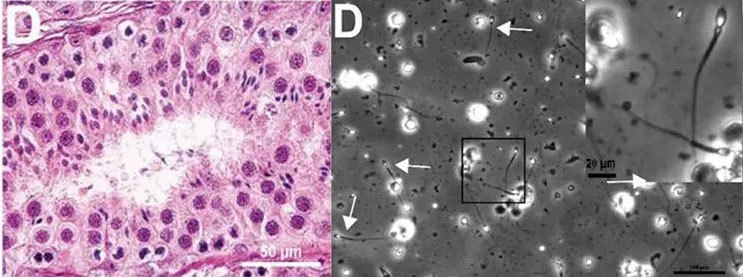
The initial small piece of testicular tissue develops a variety of cells (left) and sperm (right) that support spermatogenesis.
In the end, 70% of the seminiferous tubules produced mature sperm. The researchers also transplanted the fertilized eggs fertilized by their sperm into female rhesus monkeys and successfully produced them.
Scientists predict that in the next few years, this method will enter the clinical trial stage and help male patients who unfortunately suffered from cancer in childhood. We also look forward to the early realization of this technology to benefit human health.
Latest developments

The debut and discourse of the YinFeng Life Continuation Project not only served as an authoritative demonstration of its own ethical governance framework but also contributed practical wisdom toward establishing industry norms.

Yinfeng Foundation Honored as "2025 Public Welfare Donor" by Jinan Red Cross
Looking ahead, Yinfeng Foundation will use this recognition as an opportunity to further deepen its strategic collaboration with the Jinan Red Cross, expand cooperation in areas such as life health and emergency response, and continue to empower efforts to accelerate the construction of a "new, strong, excellent, rich, beautiful, and high-quality" modern socialist strong capital city, contributing even more Yinfeng strength to this endeavor.

The team successfully developed the CryoSIM platform, an intelligent microfluidics and deep learning-integrated system. This platform deeply integrates core technologies of deep learning and microfluidics to enable high-throughput, high-precision automated analysis of oocyte membrane permeability. It provides a novel technological tool for optimizing and advancing the clinical translation of oocyte cryopreservation techniques. Additionally, it offers an innovative practical paradigm for the application of artificial intelligence in low-temperature biomedicine and reproductive medicine.

Public Welfare Partnership: A Special Letter from the Jinan Red Cross
On the afternoon of January 30, 2026, the Jinan Red Cross presented a letter of special significance to the Shandong Yinfeng Life Science Public Welfare Foundation (hereinafter referred to as the Yinfeng Foundation).

World’s First Achievement Highlights Brand Leadership
In the future, Yinfeng Life Science Research Institute will continue to uphold its mission of "Dedicated to Medical Technology, Safeguarding Human Health." It will empower brand building with more original and pioneering scientific and technological achievements, contributing wisdom and strength to Shandong's goal of building a national regional innovation hub and promoting Chinese brands on the global stage.

Global First Ovarian Tissue Dual Activation Technology Debuts at 2025 Jinan Achievements Conference
Currently, the ovarian tissue dual activation technology has been successfully applied in clinical practice at Beijing University of Chinese Medicine Shenzhen (Longgang) Hospital, having treated over 400 patients with a treatment success rate of 70%. Over the next three years, Shandong Yinfeng Life Science Research Institute plans to use Jinan as a center to gradually expand the transformation and application of this technological achievement nationwide.
Yinfeng Life Continuation Plan
Address: Yinfeng Biotechnology Park, 1758 Gangyuan 6th Road, High-tech Zone, Jinan City, Shandong Province
Zip Code: 250102
Telephone: 0086-0531-88897351
Mobile: 0086-19953155515

Mobile website

Official WeChat Public Number
Links:Red Cross Society of China丨Shandong Red Cross Society丨Shandong Provincial Health Commission | Yinfeng Group| Yinfeng Biological Group
All rights reserved©Yinfeng Life Continuation Powered by www.300.cn SEO