

Failure is the mother of success! The world's first pig heart-to-human transplant experience brings us one step closer to success
Release time:
2023-08-04
The death of the world's first pig heart transplant recipient is extremely regrettable, and people are full of questions about the cause of his death. According to a report on the University of Maryland website on June 30, the famous medical journal "The Lancet" published a study that revealed the possible reasons for the failure of the world's first genetically modified pig heart transplant.
The first pig heart transplant patient died 2 months later, and The Lancet announced the reason for the failure.
This groundbreaking surgery, performed by doctors and scientists at the University of Maryland School of Medicine (UMSOM) in the United States in January 2022, is an important milestone in medical science.
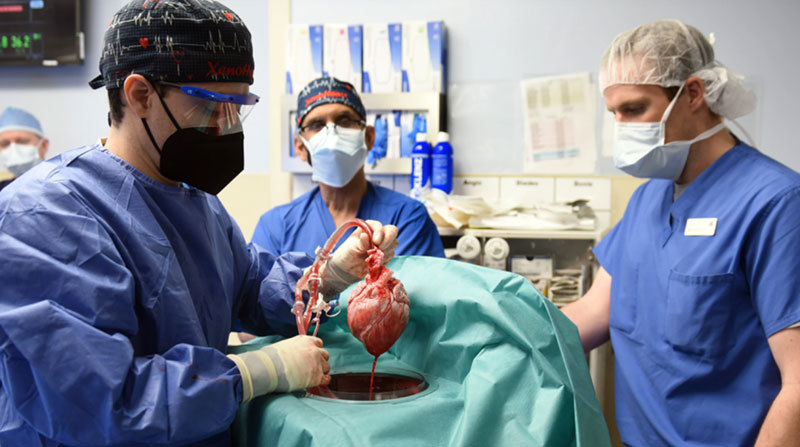
In January last year, doctors at the University of Maryland School of Medicine performed the world's first genetically modified pig heart transplant. A 57-year-old Maryland man received a "gene-edited pig heart transplant." In the first few weeks after the transplant, the man showed no signs of acute rejection. But 2 months after the transplant, the man suddenly died of heart failure.
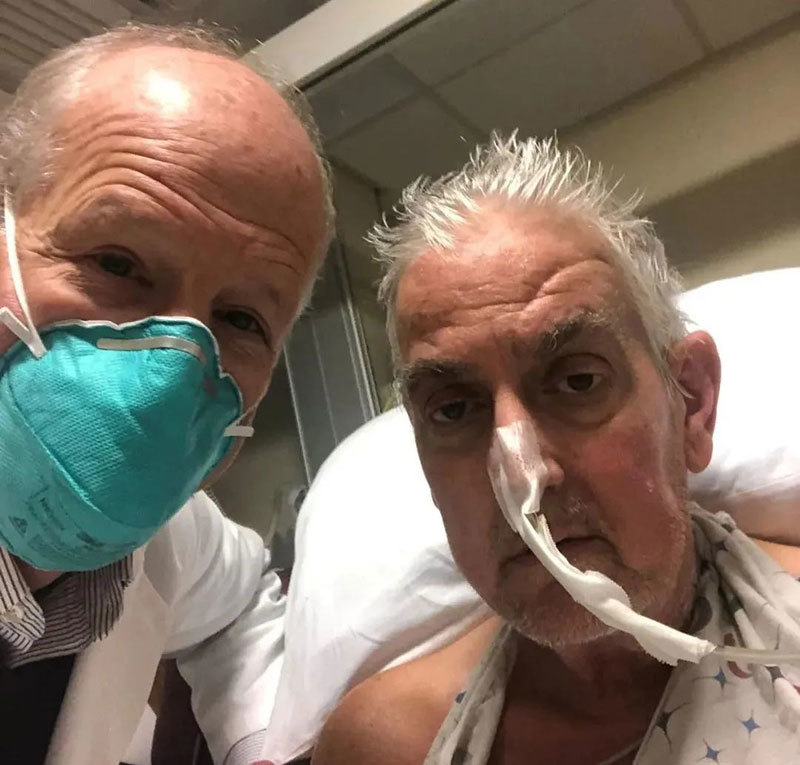
David Bennett (right) after surgery
Since then, transplant teams have studied the causes of heart failure in post-surgery patients. Mohammad Mohideen, professor of surgery at the University of Maryland School of Medicine and director of the cardiac xenotransplantation project, and Bartley Griffiths, a pig heart transplant surgeon, are the principal investigators of the project.
This new study published in The Lancet confirms that there may be multiple causes that lead to heart failure in patients.
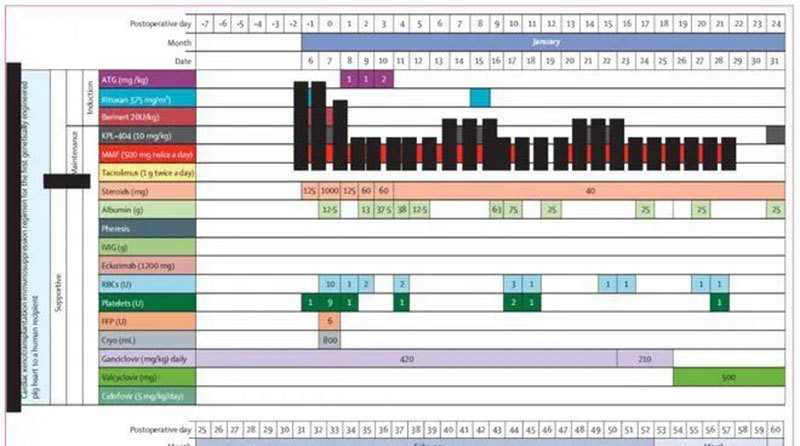
First, the patient's poor health before transplantation left his immune system severely compromised, which also limited the use of effective anti-rejection regimens used in preclinical transplantation studies. Researchers found that patients' organs may be more susceptible to rejection by antibodies produced by the immune system.
Then, the patient's use of intravenous immunoglobulin (IVIG), a drug containing antibodies, after a transplant may also result in damage to the heart muscle cells. In the second month after the transplant, the patient received two injections to help prevent infection and possibly trigger an immune response to the pig's heart.
Finally, the new study suggests that a latent virus called porcine cytomegalovirus (PCMV) may be present in pig hearts, which may cause transplant dysfunction. After patients reduce their use of antiviral treatments, the virus may become activated, possibly triggering an inflammatory response that leads to cell damage. However, there is no evidence that the virus infected patients or spread to organs other than the heart.
Griffiths said: “We hope that the next patient will not only survive longer with a transplant, but return to a normal life for months or even years.
There is a serious shortage of transplant organs worldwide, and technical breakthroughs are urgently needed.
Although the world's first pig heart transplant ended in failure, failure is the mother of success! Even so, this is a huge step forward in medical technology. The valuable experience and lessons learned from it will better provide information and basis for future xenogeneic organ transplantation, and open up people's imagination about various types of organ transplantation.
Professor Zhao Qiang, deputy director of Ruijin Hospital affiliated to Shanghai Jiao Tong University School of Medicine and a cardiac surgery expert, said that heart transplantation is technically not difficult at all. The success rate of the operation is over 95%, and the survival rate one year after the operation is as high as 95%. . But it faces a shortage of transplant organs. Therefore, scientists turned their attention to animal organs. Relevant reports show that in addition to the heart, transplantation of organs and tissues such as retina, kidney, liver, lung, pig blood, heart valve, and pancreas are all being studied, among which heart valve transplantation is relatively mature. There are millions of clinical application cases of pig and bovine valve transplantation to humans around the world.
"Of course, the pinnacle of the development of transplantation technology, taking heart transplantation as an example, is to use the patient's own cells to create an artificial, flesh-and-blood heart through laboratory culture. Such a heart is ethically, theoretically, and technically A perfect donor. In terms of genomics and immune technology, our country keeps up with the international forefront and is constantly exploring." Professor Zhao Qiang said.
Yinfeng Cryomedicine Research Center is committed to carrying out research on tissue engineering materials and 3D bioprinting. It uses placenta, umbilical cord, etc. as raw materials, and uses methods such as decellularization, freeze-drying, liquid nitrogen grinding, and enzyme treatment to form various types of tissues of different shapes. Engineering matrix materials, and allogeneic decellularized tissue engineering materials are used to prepare bio-inks, and 3D printing is used to achieve rapid, accurate, and customized clinical research and application of soft tissue filling.
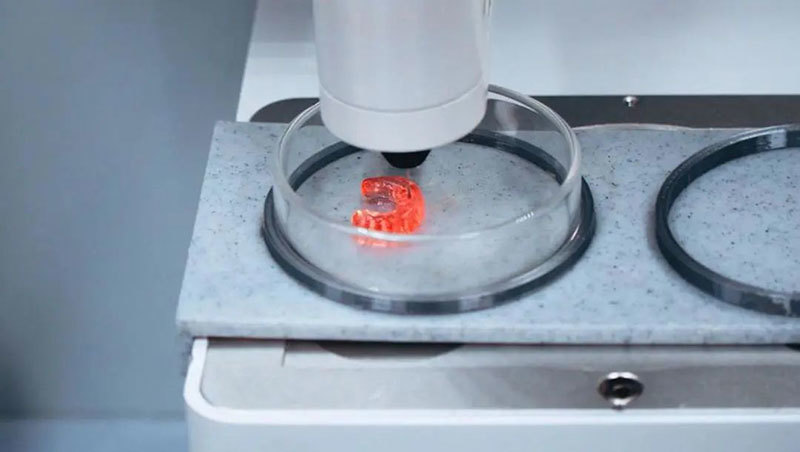
We look forward to early breakthroughs in related technologies and the realization of innovative technologies that truly save lives and protect human health.
Latest developments

The debut and discourse of the YinFeng Life Continuation Project not only served as an authoritative demonstration of its own ethical governance framework but also contributed practical wisdom toward establishing industry norms.

Yinfeng Foundation Honored as "2025 Public Welfare Donor" by Jinan Red Cross
Looking ahead, Yinfeng Foundation will use this recognition as an opportunity to further deepen its strategic collaboration with the Jinan Red Cross, expand cooperation in areas such as life health and emergency response, and continue to empower efforts to accelerate the construction of a "new, strong, excellent, rich, beautiful, and high-quality" modern socialist strong capital city, contributing even more Yinfeng strength to this endeavor.

The team successfully developed the CryoSIM platform, an intelligent microfluidics and deep learning-integrated system. This platform deeply integrates core technologies of deep learning and microfluidics to enable high-throughput, high-precision automated analysis of oocyte membrane permeability. It provides a novel technological tool for optimizing and advancing the clinical translation of oocyte cryopreservation techniques. Additionally, it offers an innovative practical paradigm for the application of artificial intelligence in low-temperature biomedicine and reproductive medicine.

Public Welfare Partnership: A Special Letter from the Jinan Red Cross
On the afternoon of January 30, 2026, the Jinan Red Cross presented a letter of special significance to the Shandong Yinfeng Life Science Public Welfare Foundation (hereinafter referred to as the Yinfeng Foundation).

World’s First Achievement Highlights Brand Leadership
In the future, Yinfeng Life Science Research Institute will continue to uphold its mission of "Dedicated to Medical Technology, Safeguarding Human Health." It will empower brand building with more original and pioneering scientific and technological achievements, contributing wisdom and strength to Shandong's goal of building a national regional innovation hub and promoting Chinese brands on the global stage.

Global First Ovarian Tissue Dual Activation Technology Debuts at 2025 Jinan Achievements Conference
Currently, the ovarian tissue dual activation technology has been successfully applied in clinical practice at Beijing University of Chinese Medicine Shenzhen (Longgang) Hospital, having treated over 400 patients with a treatment success rate of 70%. Over the next three years, Shandong Yinfeng Life Science Research Institute plans to use Jinan as a center to gradually expand the transformation and application of this technological achievement nationwide.
Yinfeng Life Continuation Plan
Address: Yinfeng Biotechnology Park, 1758 Gangyuan 6th Road, High-tech Zone, Jinan City, Shandong Province
Zip Code: 250102
Telephone: 0086-0531-88897351
Mobile: 0086-19953155515

Mobile website

Official WeChat Public Number
Links:Red Cross Society of China丨Shandong Red Cross Society丨Shandong Provincial Health Commission | Yinfeng Group| Yinfeng Biological Group
All rights reserved©Yinfeng Life Continuation Powered by www.300.cn SEO